
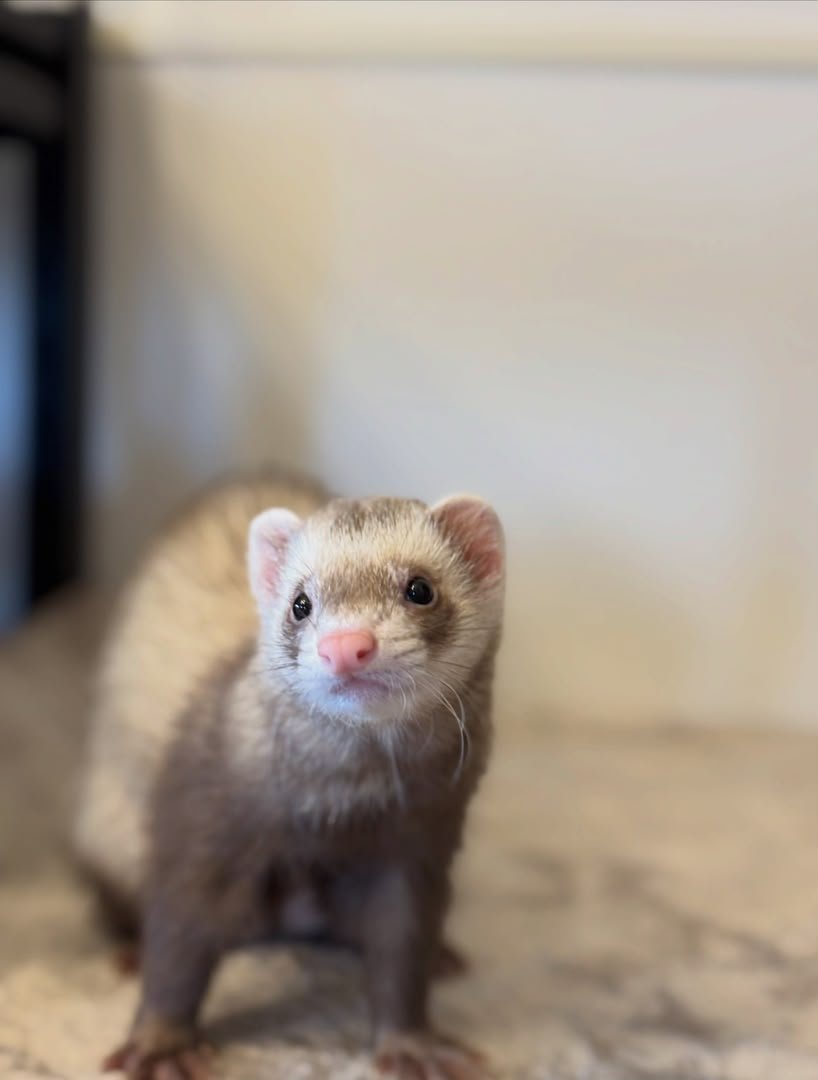
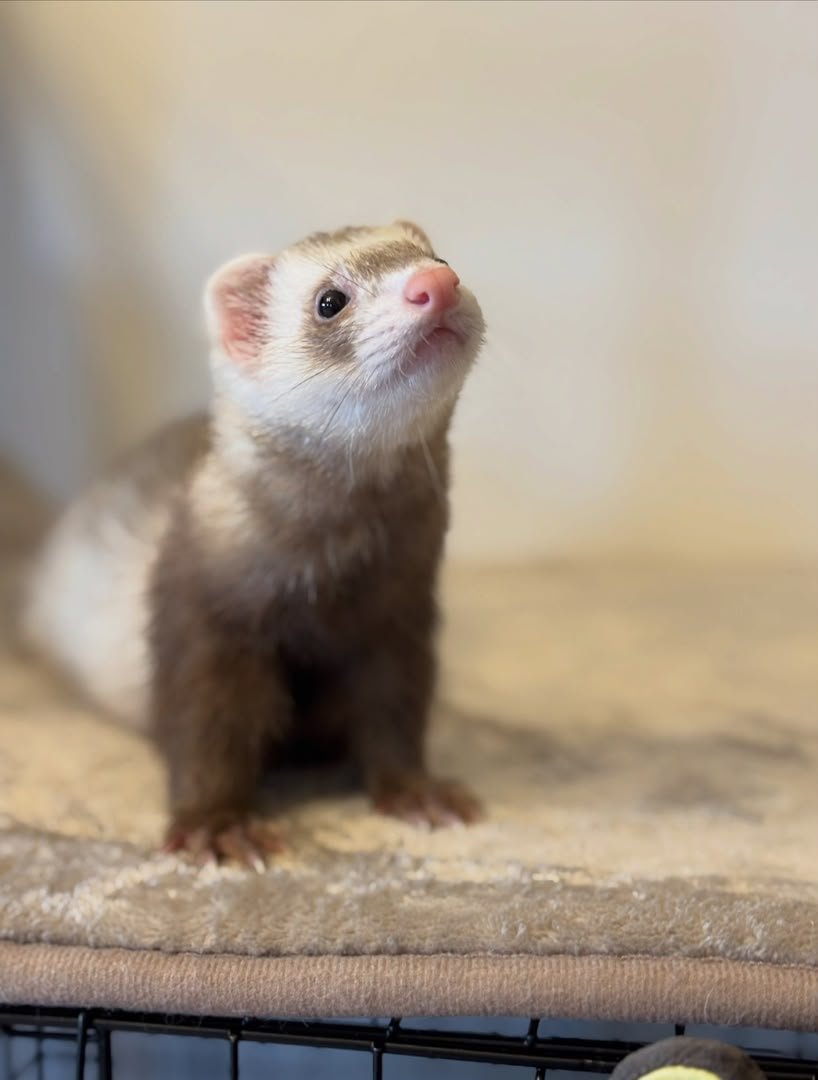


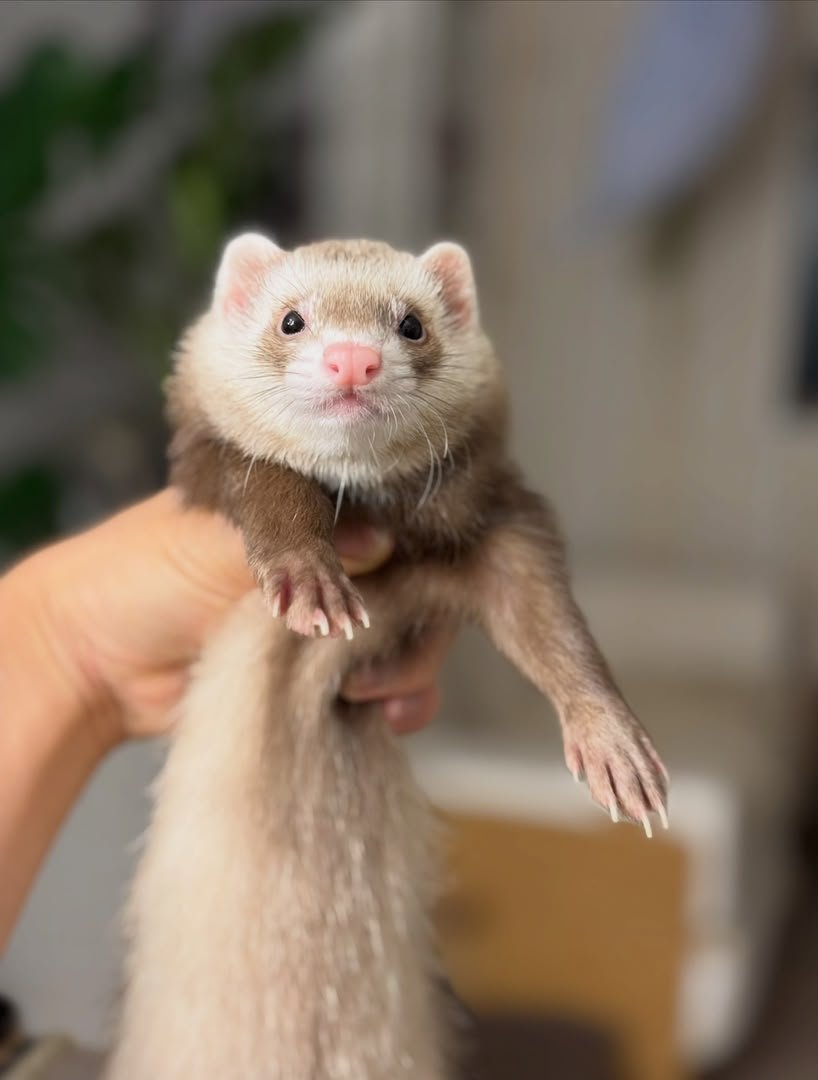
Rare Fauna currently features a hand-raised, 8-week-old female ferret named Pixie for legal home placement. Pixie is described as a high-energy, playful young ferret with classic masked facial markings, an affectionate personality, a sleek soft pelt, and the long, flexible body structure associated with this intelligent carnivore species.
She is litter-box trained and socialized to household environments. Pixie’s placement includes a pre-shipment veterinary check, socialization support, and the facility’s written health guarantee, subject to its stated conditions. Her new home must be prepared for a compact but highly active animal that can squeeze through narrow gaps, chew unsafe materials, and require secure daily play.

Pixie: Socialized Eight-Week-Old Ferret
Pixie’s energetic temperament makes a gradual transition essential. Begin with a quiet, ferret-safe area containing bedding, food, water, a litter box, tunnels, secure hiding spaces, and chew-safe enrichment.
Use short, positive handling sessions and allow Pixie to investigate new household sounds, smells, people, and routines at her own pace. Supervise all interaction with children and other pets. A playful ferret can trigger a chase response in dogs or cats, even when the other animal is not intentionally aggressive.
Female Ferret Size and Flexible Body Structure
Adult female ferrets are generally smaller than males and may mature to an approximate weight of 1 to 2 pounds. Pixie’s compact size does not reduce her need for secure equipment or careful supervision.
Her long, flexible skeletal frame allows her to explore spaces that seem too narrow for other pets. Use an enclosure with tight wire spacing, secure doors, and no accessible gaps around corners, ventilation points, flooring, or adjoining furniture.

Escape-Proof Indoor Enclosure
Pixie’s enclosure should be designed to prevent climbing, pushing, and squeezing through openings. Use escape-resistant latches that cannot be opened through repeated pawing and inspect the enclosure regularly for bent wire, loose fasteners, damaged flooring, or widened gaps.
Provide separate areas for sleeping, eating, playing, and using the litter box. Secure hammocks, covered sleeping spaces, and durable tunnels can help Pixie rest and explore while remaining contained.
Keep the enclosure away from exterior doors, open windows, heaters, electrical cords, and unstable furniture. Any elevated platform should be stable and designed to prevent falls.

Ferret-Proofing Pixie’s Play Area
Before allowing Pixie out of her enclosure, inspect the entire play area from floor level. Block openings beneath cabinets, behind appliances, inside recliners, under sofas, around plumbing, and near heating ducts. Ferrets can enter cavities and become trapped or reach dangerous mechanical components.
Remove soft rubber, foam, silicone, latex, sponge, and other chewable objects. If swallowed, these materials can cause intestinal blockages requiring urgent veterinary treatment. Secure small toys, remote-control buttons, earbud tips, shoe insoles, cleaning products, and loose household items.
Keep toilet lids closed, secure windows and doors, cover electrical cables, and supervise Pixie during every out-of-enclosure session. Recheck the room as she grows stronger and learns to climb or manipulate objects.
High-Protein Carnivorous Nutrition
Pixie’s diet should use a complete and balanced ferret formula with appropriate animal-based protein, natural fats, essential amino acids, vitamins, minerals, and taurine. The supplied care profile calls for a premium carnivorous diet without grains or complex carbohydrates to match her rapid metabolism.
Ask Rare Fauna for Pixie’s current food, feeding schedule, and portion guidance before delivery. Keep her diet consistent during the initial transition and introduce any new food gradually under the direction of an exotic-animal veterinarian.
Provide fresh water at all times and monitor Pixie’s appetite, stool quality, weight, energy, and coat condition. Avoid unbalanced meat-only feeding or supplements unless they have been specifically recommended by a qualified veterinarian.
Litter Training and Enclosure Hygiene
Pixie is described as litter-box trained, but transport and a new environment may temporarily affect her routine. Place litter boxes in the corners she naturally selects and add extra boxes near her play area or along frequently used routes.
Use ferret-appropriate, low-dust litter and avoid products that could irritate her respiratory system or become dangerous if ingested. Clean soiled areas promptly and maintain separate hygienic areas for litter, food, and water.
Wash bedding, hammocks, tunnels, and feeding equipment regularly with ferret-safe products. Allow cleaned surfaces to dry and air out fully before Pixie returns to the enclosure.
Tunnels, Chew-Safe Fixtures, and Daily Play
Pixie requires intensive daily stimulation because of her high energy and curiosity. Provide sturdy ferret tunnels, hard-sided hideouts, supervised digging activities, scent-based games, and chew-safe fixtures made from materials that will not break apart or enter her digestive tract.
Rotate enrichment items to maintain interest, but inspect everything before use. Remove any toy that becomes cracked, frayed, flexible, or small enough to swallow. Store string, elastic, feathers, and other detachable toys away when play is not supervised.
Give Pixie daily supervised time outside the enclosure. Use calm handling, chase games, and exploration activities to encourage exercise while redirecting biting, digging, or climbing toward safe alternatives.
Exotic Veterinary Examination and Health Guarantee
Pixie must be examined by a licensed exotic-animal veterinarian within 48 hours of arrival following climate-controlled live-animal transport. Arrange the appointment before delivery and confirm that the clinic has current ferret experience.
The initial examination should establish Pixie’s medical record and review her health certificate, vaccination and preventive-care history, parasite control, diet, body condition, dental health, claw condition, and future wellness recommendations.
The 48-hour appointment is also required to maintain the validity of Rare Fauna’s comprehensive health guarantee. Before completing placement, review the written guarantee carefully, including its coverage period, exclusions, required veterinary documents, notification deadlines, and process for reporting a concern.
Climate-Controlled Live-Animal Transport
Rare Fauna coordinates placements through a vetted, climate-controlled live-animal transport network and prepares mandatory state health certificates where required. The delivery schedule should account for Pixie’s young age, temperature conditions, route length, feeding and hydration needs, and the deadline for her post-arrival examination.
Prepare Pixie’s enclosure before delivery with familiar food, fresh water, bedding, a litter box, secure hiding areas, tunnels, and safe chew-resistant enrichment. Limit handling during the initial adjustment period and observe her closely after arrival.
Inspect the carrier and Pixie calmly, retain all health and transport documents, and monitor eating, drinking, stool, urination, energy, breathing, and behavior during the first day. Contact the veterinarian promptly if she shows concerning symptoms.
Rare Fauna Placement and Compliance Process
All Rare Fauna placements undergo pre-shipment veterinary wellness checks and preparation of mandatory state health certificates where required. The facility coordinates delivery to compliant destinations through its placement and transport procedures.
Ferret ownership laws can vary by state, county, or municipality. Before applying, prospective owners should confirm local legality and identify any permit, vaccination, registration, enclosure, or transport requirements that apply to their address.
Applicants should also confirm that they can provide a secure tight-spaced enclosure, complete ferret nutrition, ferret-proofed rooms, daily supervised play, safe tunnels and chewing fixtures, routine cleaning, and access to an exotic-animal veterinarian.
Apply to Reserve Pixie
Pixie’s placement is intended for a buyer prepared for the energy, compact size, escape ability, chewing risks, and daily enrichment needs of a young female ferret. Confirm local legality, schedule the 48-hour exotic-veterinary appointment, prepare her secure enclosure and play zones, review the written health guarantee, and confirm transport terms before submitting an application.
To begin the placement process, complete the secure application with Rare Fauna and wait for destination and delivery approval before arranging transport.



Reviews
There are no reviews yet.