
Buy Finger Monkey For Sale| Pygmy Marmoset For Sale from a Permitted Private Facility
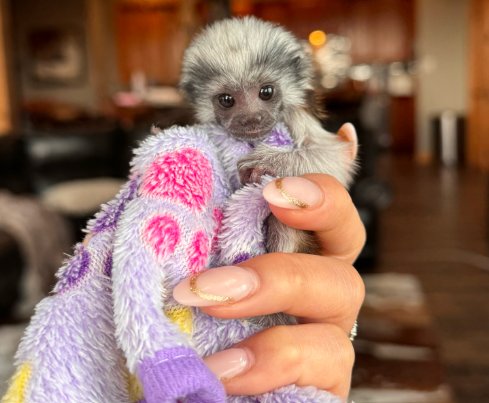
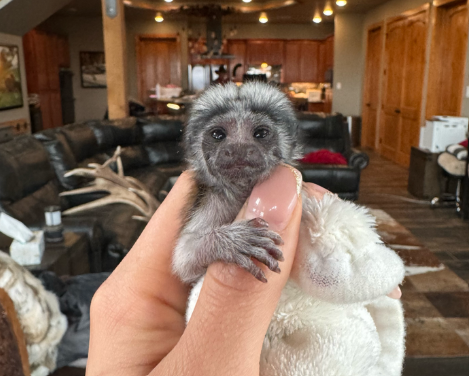
Rare Fauna currently features a hand-raised, 12-week-old male pygmy marmoset named Niko for legal private placement. Often marketed as a finger monkey, Niko is described as an active, intelligent young New World primate with expressive facial tracking, confident social behavior, clean fur patterns, and strong feeding responses from targeted syringes.
Niko has been socialized to human handling and is described as cleared by the facility’s wildlife medical board. His placement includes pre-shipment veterinary preparation and the facility’s written health guarantee, subject to its stated conditions. A pygmy marmoset requires specialized primate housing, a complex diet, ultraviolet lighting, compatible social contact, and strict legal documentation before transport can be approved.

Niko: Socialized Twelve-Week-Old Pygmy Marmoset
Niko’s early socialization to human handling provides a foundation for veterinary care and routine husbandry, but it does not remove the need for species-appropriate social contact. Human interaction cannot fully replace the communication, grooming, play, and behavioral feedback provided by compatible marmosets.
Any transition should be slow and closely monitored. Prepare the enclosure before arrival, limit unnecessary handling during the first adjustment period, and establish predictable feeding, cleaning, enrichment, and rest routines. Only trained adults should manage Niko’s daily care, and children or untrained visitors should not handle him unsupervised.
Small Body, Large Vertical Space Requirement
Adult pygmy marmosets may weigh approximately 4 to 5 ounces and reach about 5 inches in body length, but their small size does not mean they can live in a small enclosure. Niko needs expansive vertical space for leaping, climbing, resting, and moving between elevated levels.
The enclosure should provide secure height, multiple perches, naturalistic branches, sheltered sleeping areas, and enough horizontal clearance to prevent collisions. Use materials that are non-toxic, easy to disinfect, and strong enough to withstand constant climbing and chewing.
Inspect doors, seams, mesh, fasteners, and service openings daily. A marmoset can exploit small gaps, so the containment system should include secure locks and a controlled entry protocol that prevents accidental escape.

New World Primate Gum and Insect Diet
Niko’s dietary program should be designed for a pygmy marmoset by an experienced exotic-primate veterinarian or qualified nutrition professional. The supplied profile calls for New World primate gum and gut-loaded insects to reflect natural tree-gouging and insect-foraging behaviors.
Offer only species-appropriate gum products and feeder insects from controlled sources. Gut-loading should be planned around Niko’s complete nutritional requirements rather than treated as a substitute for a formulated primate diet.
Because Niko currently feeds from targeted syringes, maintain the facility’s established feeding schedule during the transition and ask for precise preparation, volume, frequency, and weaning instructions. Monitor appetite, hydration, stool, body weight, and feeding behavior closely.
Do not improvise a human baby formula, fruit-heavy diet, or supplement regimen. Pygmy marmoset nutrition is specialized, and errors can create serious gastrointestinal, dental, or metabolic problems.
Full-Spectrum UVB Lighting Arrays
The enclosure requires specialized full-spectrum UVB lighting to support vitamin D3 synthesis and reduce the risk of metabolic bone disease. Install lighting according to the manufacturer’s distance, exposure, replacement, and shielding requirements.
Provide a gradient so Niko can move toward or away from the light and include shaded resting areas. Measure the effective UVB output rather than relying only on the appearance of the bulb, and replace lamps according to the manufacturer’s service interval.
Keep electrical equipment protected from chewing, moisture, and climbing access. A qualified exotic veterinarian should review the lighting arrangement, diet, calcium balance, and skeletal development together rather than treating UVB as a standalone solution.
Pair or Troop-Based Social Housing
Pygmy marmosets are highly social primates and should not be maintained in prolonged isolation. The supplied care profile recommends compatible pair or troop housing to reduce severe psychological stress and abnormal behaviors such as self-directed injury.
Any companion introduction must be planned by professionals and performed gradually through controlled visual, olfactory, and physical stages. Compatibility depends on age, sex, health, temperament, prior social history, enclosure design, and veterinary oversight.
Do not place Niko directly with an unfamiliar marmoset, and do not assume that a second animal is automatically compatible. Maintain a safe separation option until the introduction process is complete and a qualified primate professional confirms the arrangement.
Enrichment for Foraging and Facial Tracking
Niko needs daily enrichment that reflects his active foraging intelligence and visually responsive behavior. Use supervised food-search activities, concealed gum stations, insect-foraging opportunities, climbing routes, rotating perches, and safe manipulable objects.
Change enrichment locations and feeding presentation without making the routine unpredictable or withholding essential food. Observe how Niko tracks movement, investigates new objects, and communicates during play.
Remove damaged, splintered, toxic, or swallowable items immediately. Keep enrichment separate from cleaning chemicals, electrical equipment, and any object that could entangle a climbing primate.
Specialized Primate Containment and Household Safety
A pygmy marmoset enclosure should be treated as a controlled wildlife-husbandry area rather than an ordinary pet cage. Use a secure double-door or equivalent access system where appropriate, maintain a record of entries, and keep escape-prevention procedures visible to every authorized caregiver.
The surrounding room should be free from toxic plants, exposed electrical cords, open water containers, fumes, loose hardware, and household objects that Niko could chew or swallow. Keep other pets away from the enclosure unless a qualified professional has approved a controlled management plan.
Daily cleaning should remove waste and spoiled food without eliminating all familiar environmental cues at once. Use primate-safe disinfectants, rinse surfaces thoroughly, and allow the enclosure to dry before reintroducing Niko.
Exotic Wildlife Veterinary Examination and Health Guarantee
Niko must be examined by a licensed exotic-wildlife veterinarian within 48 hours of arrival following climate-controlled live-animal transport. Arrange the appointment before delivery and confirm that the veterinarian has current experience with pygmy marmosets or comparable New World primates.
The initial examination should establish Niko’s medical record and review his health certificate, body weight, hydration, feeding history, teeth, skin and fur, limbs, gait, behavior, parasite-control plan, vaccination requirements, UVB setup, and diet.
The 48-hour appointment is also required to maintain the validity of Rare Fauna’s comprehensive health guarantee. Before completing placement, review the written guarantee carefully, including its coverage period, exclusions, required veterinary documentation, notification deadlines, and process for reporting a concern.
Wildlife Ownership Laws and Permit Verification
Pygmy marmoset ownership is regulated differently across states, territories, counties, and municipalities. Some jurisdictions prohibit private possession, while others require wildlife permits, facility inspections, veterinary records, or specific enclosure standards.
Do not rely solely on a seller’s destination approval. Before applying, obtain current written confirmation from the relevant wildlife, environmental, or agricultural authority that possession, importation, transport, and housing are lawful at the intended address.
Rare Fauna’s compliance office is described as auditing required legal documentation before final transit approval. Buyers remain responsible for obtaining and maintaining every permit, registration, inspection, and local authorization required after delivery.
Climate-Controlled Live-Animal Transport
Rare Fauna coordinates wildlife placements through a vetted, climate-controlled live-animal transport network and prepares mandatory state health certificates where required. The delivery schedule should account for Niko’s young age, temperature conditions, route length, feeding and hydration requirements, and the deadline for his post-arrival examination.
Prepare the complete enclosure, lighting system, diet, feeding equipment, and veterinary appointment before shipment. Keep the receiving area quiet and restrict access to trained caregivers during the first adjustment period.
Inspect Niko and the transport container calmly upon arrival, retain all health and legal documents, and monitor feeding, hydration, stool, activity, vocalization, movement, fur condition, and interaction patterns. Contact the exotic-wildlife veterinarian promptly if he shows concerning changes.
Rare Fauna Wildlife Placement Process
All wildlife placements from Rare Fauna undergo pre-shipment veterinary wellness checks and preparation of mandatory state health certificates where required. Delivery is coordinated only to destinations where the facility’s compliance process confirms that possession and transport are permitted.
Before applying, prospective owners should have a legally approved primate enclosure, a qualified exotic-wildlife veterinarian, a written nutrition plan, full-spectrum UVB lighting, secure escape-prevention systems, daily enrichment, a compatible socialization strategy, and trained caregivers available for Niko’s long-term care.
Apply to Reserve Niko
Niko’s placement is intended for an experienced, legally authorized caregiver prepared for the specialized demands of a pygmy marmoset: vertical primate housing, New World gum and insect nutrition, UVB management, social companionship, secure containment, intensive enrichment, and ongoing exotic-wildlife veterinary care.
Confirm local ownership and permit requirements, complete the enclosure and lighting setup, schedule the 48-hour veterinary examination, review the written health guarantee, and obtain compliance approval before submitting a placement application.
To begin the process, complete the secure application with Rare Fauna and wait for destination and delivery approval before arranging transport.
APPLICATION FORM


Reviews
There are no reviews yet.